Language Insights
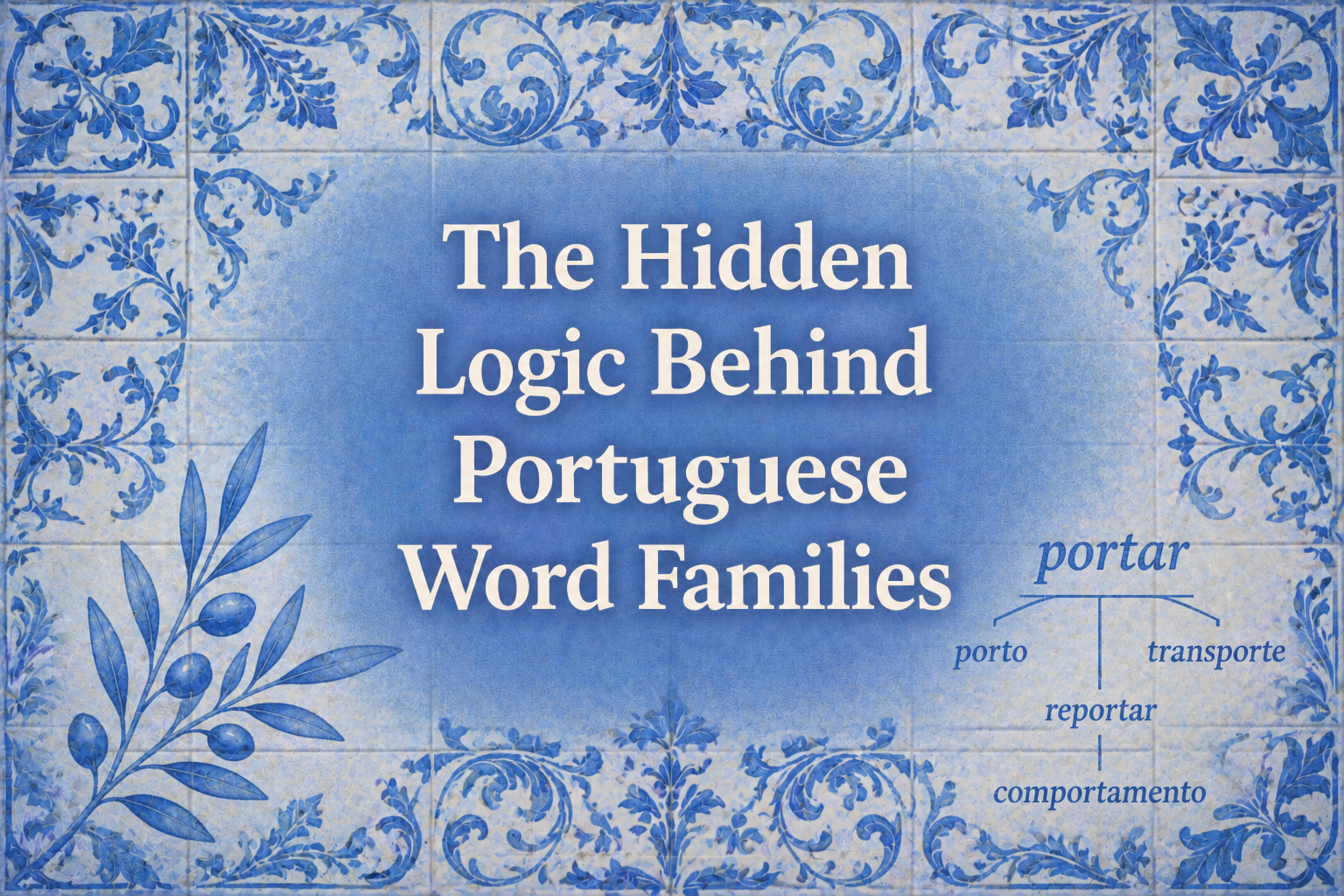
The Hidden Logic Behind Portuguese Word Families
At first, Portuguese vocabulary can seem endless. You learn one word, then another, then ten more that look vaguely similar but slightly confusing. But after a while, something interesting starts to happen: you begin noticing that many Portuguese words belong to families.
And once you recognise those patterns, learning vocabulary becomes much easier.
🌱 One Root, Many Words
Portuguese often builds several related words from the same root.
For example:
-
nação — nation
-
nacional — national
-
nacionalidade — nationality
-
internacional — international
Instead of learning four completely separate words, you can start seeing the connections between them.
🧠 Endings Give You Clues
Portuguese endings often signal what kind of word you’re looking at.
For example:
-dade
Usually forms abstract nouns:
-
real → realidade
-
universal → universalidade
-mente
Usually creates adverbs:
-
normal → normalmente
-
feliz → felizmente
-ção
Often indicates an action or process:
-
informar → informação
-
celebrar → celebração
You don’t need to memorise every rule, just recognising the pattern helps enormously.
🔍 Guessing New Words
This is where word families become really useful.
Even if you’ve never seen a word before, you can often make a good guess.
For example:
If you know:
- tradicional — traditional
then:
- tradicionalmente probably means “traditionally”.
And most of the time, you’ll be right.
📚 Why This Helps Learners
Word families help you:
-
recognise vocabulary faster
-
expand your vocabulary naturally
-
understand texts without translating every word
-
feel less overwhelmed by long words
This is one reason Portuguese starts becoming easier after the beginner stage, the patterns slowly reveal themselves.
🧭 Final Thought
Portuguese vocabulary is not random.
Underneath the long words and unfamiliar endings, there’s a surprising amount of structure and repetition.
And once you start seeing those hidden connections, the language becomes much less intimidating and much more enjoyable to explore.